
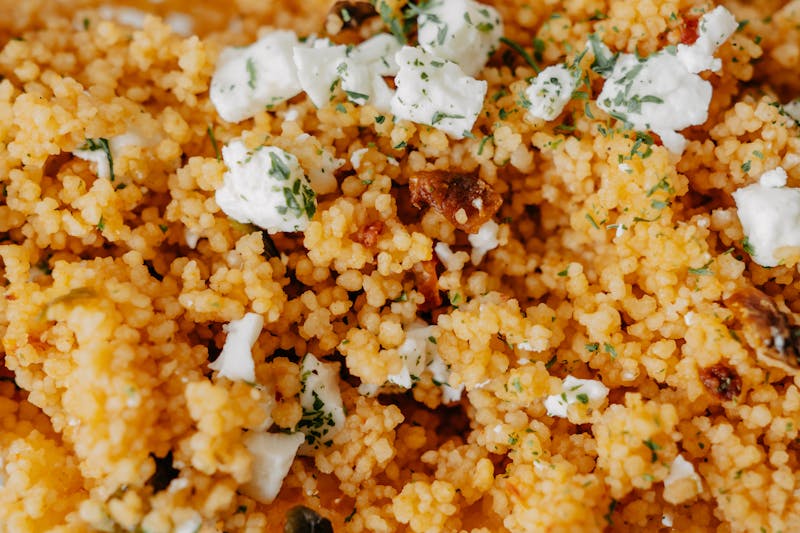
Is couscous gluten free? Despite its grain-like appearance, the answer may surprise many people. Couscous is a staple in Mediterranean, North African, and Middle Eastern cuisine, and it often appears in salads, side dishes, and grain bowls.
Because it resembles rice or quinoa, many assume it is naturally gluten-free. However, couscous is usually made from wheat, which changes everything for people with celiac disease, gluten sensitivity, or wheat allergies.
1. What Is Couscous Made Of?
Couscous is often mistaken for a grain, but it is actually a type of pasta. Traditional couscous is made from semolina, which comes from durum wheat.
Manufacturers combine semolina flour with water to create tiny pellets. These pellets are then dried and packaged for cooking. Since semolina is a wheat product, traditional couscous contains gluten.
According to the Celiac Disease Foundation, semolina is one of the many wheat derivatives that contain gluten.
Several varieties of couscous exist around the world:
- Moroccan couscous, the smallest and most common type
- Israeli couscous, also called pearl couscous
- Lebanese couscous, which has larger pasta pearls
Although their sizes differ, these varieties are typically made from wheat-based semolina. As a result, they are not suitable for a gluten-free diet.
2. Is Couscous Gluten Free or Not?
The simple answer is no. Traditional couscous is not gluten free because it is made from durum wheat semolina. Gluten is naturally present in wheat, barley, rye, and their derivatives.
Many people are confused because couscous looks similar to rice. However, appearance can be misleading. Couscous is closer to pasta than grain from a nutritional and ingredient standpoint.
Why Gluten Matters
For most people, gluten is not a problem. However, some individuals must avoid it completely. This includes people with:
- Celiac disease
- Non-celiac gluten sensitivity
- Wheat allergies
Even a small serving of traditional couscous may trigger symptoms in sensitive individuals.
Are There Gluten-Free Versions?
Yes, but they are less common.
Some specialty brands make gluten-free couscous using ingredients such as corn, rice, cassava, sorghum, or other gluten-free grains.
However, shoppers should always check the ingredient list and look for a certified gluten-free label before purchasing.
>>> Read more: Is Risotto Gluten Free? Important Facts You Must Know Before Ordering
3. Safe Gluten-Free Couscous Alternatives to Consider
Quinoa
Quinoa is one of the most popular substitutes. It has a light texture, cooks quickly, and provides protein, fiber, and essential minerals.
It works especially well in salads, grain bowls, and side dishes.
Millet
Millet has a mild flavor and fluffy texture. It resembles couscous when cooked and pairs well with vegetables and herbs.
Rice
White rice and brown rice are naturally gluten free. They are widely available and easy to use in place of couscous.
Cauliflower Rice
People looking for a lower-carbohydrate option often choose cauliflower rice. It provides a similar texture while adding vegetables to meals.
Certified Gluten-Free Couscous Products
Some manufacturers offer gluten-free couscous alternatives made from corn or cassava. These products may closely resemble traditional couscous while remaining safe for gluten-free diets. Always verify certification before purchasing.
4. Who Should Avoid Couscous and When It Matters
Not everyone needs to avoid it. However, certain groups should be cautious.
People With Celiac Disease
Celiac disease is an autoimmune condition triggered by gluten. Consuming wheat-based couscous can damage the small intestine and lead to long-term health complications.
People With Gluten Sensitivity
Some individuals experience symptoms after eating gluten despite not having celiac disease. Traditional couscous may trigger digestive discomfort and other symptoms.
People With Wheat Allergies
Because couscous contains wheat, it may cause allergic reactions in people with wheat allergies. Reactions vary from mild symptoms to more serious responses.
People Following a Gluten-Free Lifestyle
Some people avoid gluten for personal dietary reasons. In these cases, traditional couscous does not align with their dietary goals.
5. How to Eat Couscous Safely on a Gluten-Free Diet
If you follow a gluten-free diet, eating couscous safely requires careful label reading and meal planning.
Step 1: Read the Ingredient List
Check whether the product contains semolina, durum wheat, wheat flour, or other gluten-containing ingredients.
Step 2: Look for Gluten-Free Certification
A certified gluten-free label provides additional confidence that the product meets strict gluten standards.
Step 3: Prevent Cross-Contamination
Even gluten-free ingredients can become contaminated during preparation. Use separate:
- Cooking utensils
- Cutting boards
- Storage containers
Step 4: Ask Questions at Restaurants
Restaurant couscous is usually wheat-based. Ask staff about ingredients and preparation methods before ordering.
Step 5: Choose Safer Alternatives
When in doubt, select quinoa, rice, millet, or another naturally gluten-free substitute.
6. FAQs
Can small amounts of couscous trigger celiac symptoms?
Yes. Even small amounts of gluten can trigger symptoms and intestinal damage in people with celiac disease.
Is whole wheat couscous gluten free?
No. Whole wheat couscous still contains wheat and gluten.
What grains are safe if you need gluten-free options?
Quinoa, rice, millet, buckwheat, and certified gluten-free oats are common options.
Is couscous considered healthier than quinoa for digestion?
Quinoa generally offers more protein and fiber. However, digestive tolerance varies from person to person.
Does cooking couscous reduce gluten in any way?
No. Cooking does not remove or reduce gluten from wheat-based couscous.
7. Conclusion
Is couscous gluten free? Traditional couscous is not gluten free because it is made from semolina, a form of durum wheat that naturally contains gluten.
Fortunately, there are many safe alternatives available. Quinoa, millet, rice, cauliflower rice, and certified gluten-free couscous products can provide a similar texture without the risks associated with gluten.